What a review will include
The listing is the starting point, not the evidence.
When a property can be reported fairly, a review will make the limits visible as well as the useful details. A walk-through is not an appraisal, a survey, or a legal review.
Asking price and €/m²
We will state the asking price shown when checked, the source and date, and the simple asking-price-per-square-meter calculation. The review will identify the listing area used as the denominator and any area assumption we could not verify. An asking price is not a sale price, valuation, or recommendation to offer.
Access and common areas
The route, building exterior, entrance, stairs, lift or lack of one, and visible common areas all affect ordinary life. We will show what access looked like on that visit, not imply that one pass answers every accessibility or building-management question.
Light, noise, and layout
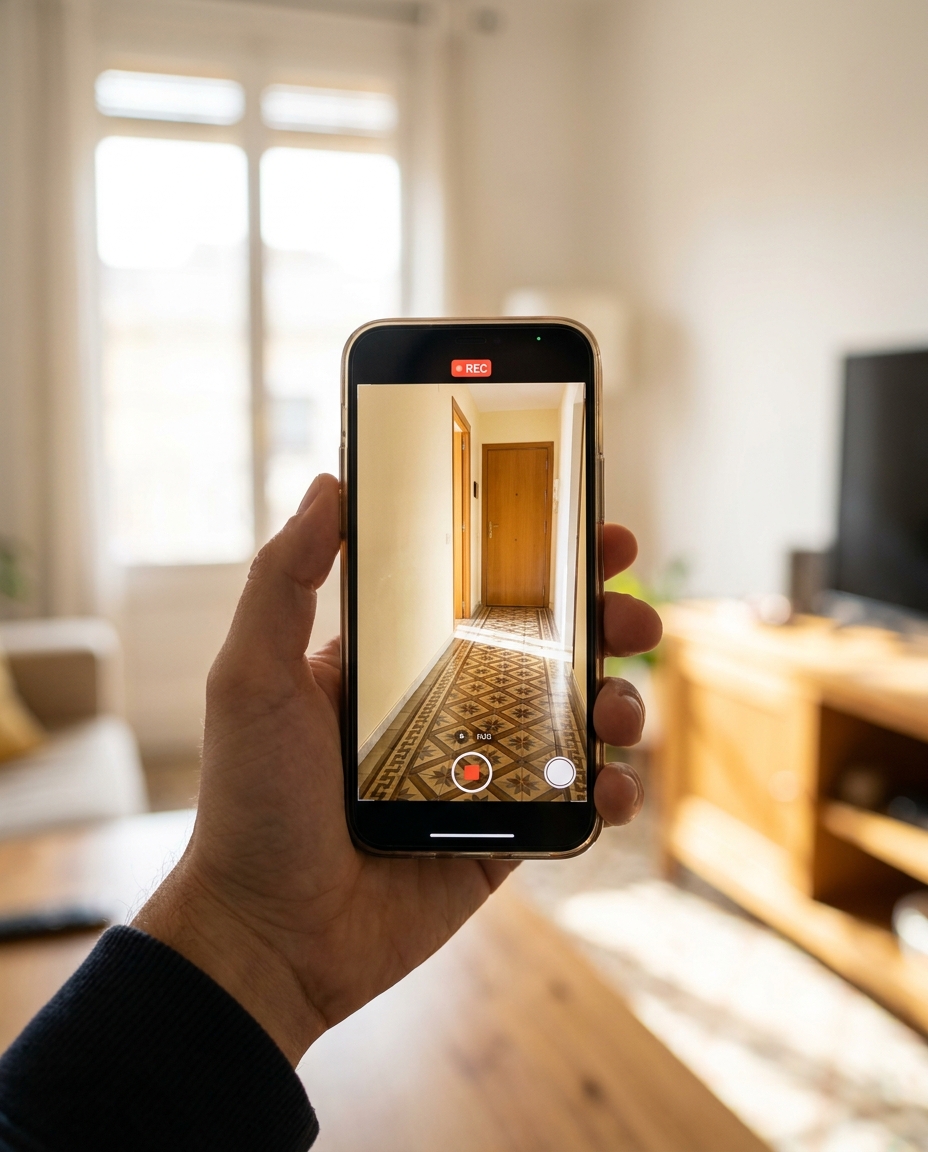
We will record the time and conditions where they matter, look at room flow and usable storage, and open windows when outside sound is relevant. A short recording can show a moment. It cannot guarantee every hour, season, or neighbor.
Visible condition clues
We will point out what is visible: ventilation, staining, fresh paint, fittings, electrical or plumbing clues, finishes, and building upkeep where accessible. A visible clue is not a diagnosis of its cause, severity, or repair cost.
Records and unknowns
We will identify relevant records, listing information, or documents that were available to us, say where they came from, and keep personal information out of the review. We will also name what we could not verify and what needs an independent lawyer or qualified technical professional.
Neighborhood context
A review will place the home in its immediate street and daily-life context: the useful route, terrain, nearby activity, and noise or access conditions observed. Time-sensitive local facts will be dated and sourced rather than turned into permanent neighborhood slogans.
 CitrusNest